Peer-Reviewed Clinical Publication

Advancing the Frontier of Soft Tissue Reconstruction

Independent surgical reviews, clinical observations, and outcome data on next-generation regenerative techniques, curated for plastic, reconstructive, and trauma surgeons.

240+
Peer Reviews
18
Contributing Surgeons
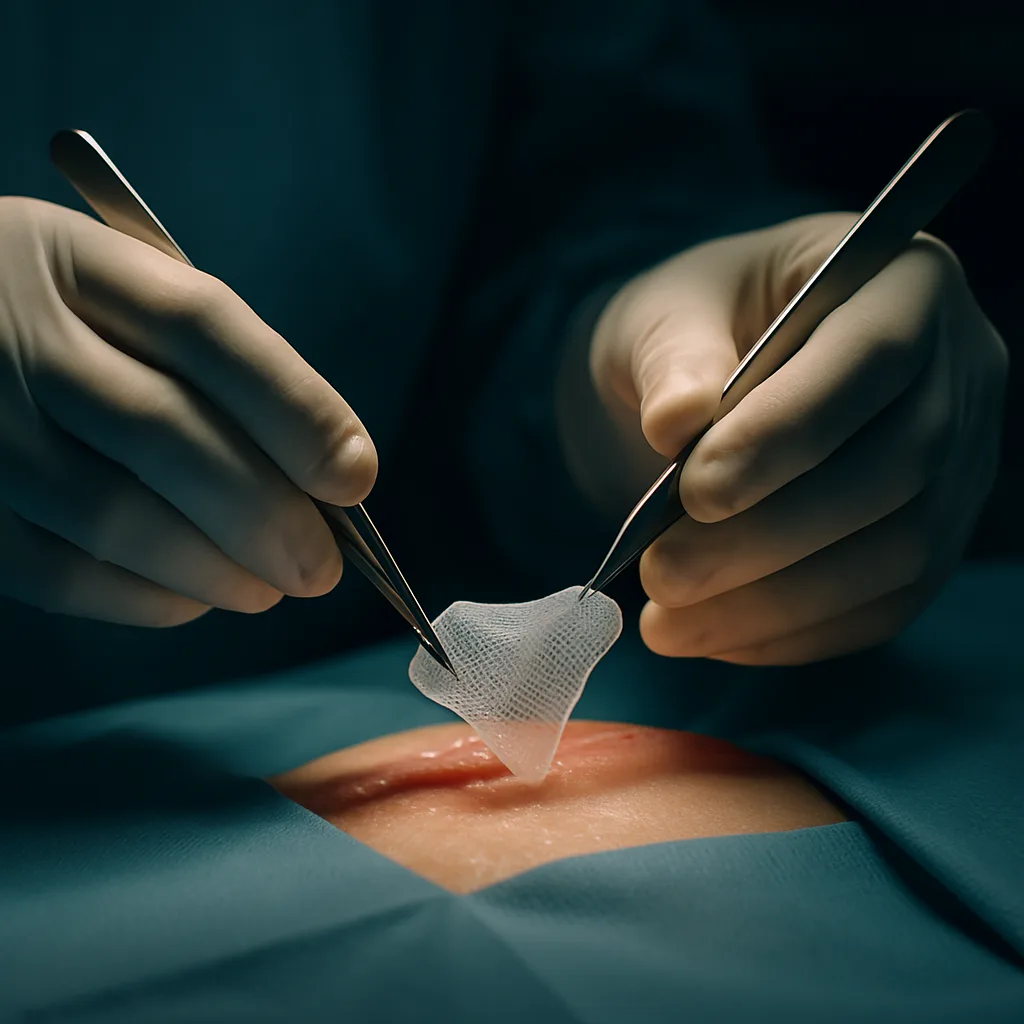
Surgeon's gloved hands performing precise soft tissue reconstruction under clinical OR lighting
Vol. 07 / Case Study
An editorial desk arranged with peer-reviewed surgical journals and anatomical reference plates in soft daylight
Fig. 01 Editorial Desk, Vol. XII
Our Mission

An Independent Voice for Operative Innovation

Spotlight on peer-reviewed techniques, clinical observation reports, and surgical tool evaluations, including next-generation tissue scaffolds, that accelerate recovery and improve reconstructive outcomes.

Rigorous. Independent. Operative.
The Editorial Standard
100%
Peer-reviewed sourcing
Zero
Sponsored editorial
Read Our Editorial Charter

What We Publish

Six Pillars of Surgical Knowledge

A structured editorial framework covering the full arc of soft tissue reconstruction, from bench evaluation to postoperative outcome analysis.

Pillar 01 Peer Review

Peer-Reviewed Surgical Reviews

In-depth evaluations of operative techniques with outcome benchmarking. Each review is vetted by a standing board of reconstructive and trauma specialists, with statistical rigor applied to comparative results across institutions.

Pillar 02 Case Reports

Clinical Case Observations

First-hand case reports from reconstructive and trauma surgeons in the field. Presentations follow a structured format: patient context, operative rationale, intraoperative decision-making, and longitudinal follow-up beyond the standard 90-day window.

Pillar 03 Biomaterials

Tissue Scaffold & Matrix Evaluations

Rigorous assessment of next-generation regenerative biomaterials, including Conexeu scaffolds. Evaluations cover integration kinetics, host response profiles, and comparative performance against established acellular dermal matrices.

Pillar 04 Technique

Procedural Technique Spotlights

Step-by-step operative breakdowns with annotated imagery. Each spotlight isolates the technical inflection points of a procedure, including instrument selection, tissue handling considerations, and closure strategy.

04
Annotated Operative Atlas
Vol. XII · Fig. 4.1 – 4.9
Outcome Index Q3 · 2024
−38%
Recovery interval, mean
2.1%
Major complication rate
n=847
Aggregated cohort
Pillar 05 Outcomes

Outcome & Recovery Data Summaries

Aggregated data on postoperative recovery acceleration and complication rates. Summaries synthesize multi-center registries and prospective series, with stratification by patient risk profile, defect etiology, and matrix generation.

Pillar 06 Accredited CME

CME-Eligible Content

Accredited continuing education formatted for busy surgical practitioners. Modular units are structured for completion between cases, with post-assessment review and category-eligible credit reporting on request.

Browse Current Modules
Accredited Curriculum 1.0 AMA PRA · Cat 1
  • Matrix Selection in Complex Abdominal Wall Reconstruction 45 min
  • Regenerative Scaffolds: Integration & Remodeling Kinetics 60 min
  • Postoperative Recovery Protocols in Soft Tissue Repair 30 min
Latest from the Journal

Recent Surgical Reviews & Clinical Insights

Peer-informed reporting on tissue matrix performance, operative technique, and reconstructive outcomes, published as the evidence emerges from the OR.

Surgical Review Nov 12, 2024

Conexeu Scaffold Performance in Full-Thickness Abdominal Wall Reconstruction: A 12-Month Outcomes Report

A prospective review of 28 consecutive reconstructions evaluating hernia recurrence, tissue integration, and functional recovery across the first postoperative year.

Read Full Review
Clinical Observation Oct 28, 2024

Acellular Dermal Matrix in Complex Breast Reconstruction: Operative Lessons from 40 Cases

Practical intraoperative decisions, pocket management, and matrix orientation strategies drawn from a two-surgeon series with reproducible aesthetic outcomes.

Read Full Review
Technique Spotlight Oct 09, 2024

Layered Closure Strategies for High-Tension Extremity Wounds Using Next-Gen Tissue Matrices

A staged approach to dermal reinforcement and vector-aware closure that has reduced dehiscence in traumatic lower-limb reconstructions across three institutions.

Read Full Review
Browse All Publications
From the Surgical Community

Trusted by Reconstructive & Trauma Surgeons

Peer testimony from clinicians integrating RST's evidence into daily operative practice, from academic medical centers to fellowship programs.

The scaffold evaluation data published in RST directly informed my approach to complex abdominal wall cases. The operative detail is unmatched in any other publication.
Dr. M. Hartley
Chief of Plastic Surgery
Regional Academic Medical Center
Finally, a journal that bridges laboratory science and the operating room. The clinical case observations are immediately applicable to daily practice.
Dr. S. Okafor
Reconstructive Surgeon
RST's outcome summaries save me hours of literature review. The data is curated, rigorous, and presented in a format surgeons can actually use.
Dr. L. Vasquez
Trauma Surgery Fellowship Director
The Conexeu scaffold review gave our department the evidence we needed to update our tissue matrix protocol with confidence.
Dr. P. Chen
Hand & Reconstructive Surgery
Swipe to read more
Editorial Leadership

Our Board of Clinical Contributors

Regenerative Surgery Today is shaped by practicing surgeons, not science writers. Our contributors bring first-hand operative expertise to every review.

Dr. Marcus Elden, Editor-in-Chief
01
Editor-in-Chief

Dr. Marcus Elden, MD, FACS

Board-certified plastic and reconstructive surgeon with more than twenty years of operative experience across complex soft tissue reconstruction. Fellowship-trained in microsurgery, Dr. Elden leads editorial direction with an emphasis on operative reproducibility, patient-reported outcomes, and the disciplined evaluation of emerging regenerative techniques.

ABPS Board-Certified Microsurgery Fellowship FACS
Affiliation · Johns Hopkins Department of Plastic & Reconstructive Surgery
Dr. Priya Ashcroft, Senior Clinical Editor
02
Senior Clinical Editor

Dr. Priya Ashcroft, MD, PhD

A trauma surgery specialist and outcomes researcher, Dr. Ashcroft oversees the journal's clinical review pipeline. Her published work in JPRAS and the Annals of Surgery has advanced protocols for extremity salvage and delayed reconstruction, and she brings a rigorous methodological lens to every submission crossing the editorial desk.

Trauma Surgery Outcomes Research JPRAS Contributor
Affiliation · University of Michigan Trauma Reconstructive Services
Dr. Aleksander Weiss, Biomaterials Reviewer
03
Biomaterials Reviewer

Dr. Aleksander Weiss, MD, DPhil

An academic reconstructive surgeon with a doctoral background in tissue engineering, Dr. Weiss evaluates scaffold performance, acellular matrix behavior, and next-generation regenerative substrates. His reviews focus on translating bench-side biomaterial data into surgically defensible operative decisions.

Tissue Engineering Scaffold Research Oxford DPhil
Affiliation · Radcliffe Department of Surgical Sciences, Oxford

Contributing surgeons shape the standard of evidence we publish.

Editorial Submissions Vol. XII

Contribute to the Surgical Record

Submit a clinical case observation, surgical review, or technique report. Our editorial board reviews all submissions against peer-review standards.

Review Cycle
6-8 weeks
Acceptance
Rolling

Double-blind peer review. No submission fees. ISSN registered.

Common Questions

Everything You Need to Know

For surgeons evaluating our editorial standards, submission workflow, and access model, the answers below address the questions we hear most often from department chairs, residents, and practicing specialists.

01

Is Regenerative Surgery Today peer-reviewed?

Yes. All surgical reviews and clinical observations undergo double-blind peer review by board-certified specialists across plastic, reconstructive, and trauma disciplines before publication.

02

How do I submit a manuscript or case report?

Manuscripts are received through our online submission portal. Our editorial board issues a preliminary assessment within 10 business days, followed by full peer review for accepted submissions.

03

Are articles CME-accredited?

Selected reviews carry CME credit through our accreditation partner. Eligible articles are clearly marked at the top of each publication, with claim instructions provided at the end of the piece.

04

Is access free for subscribers?

Digital access is free for registered surgical practitioners. Institutional licensing is available for residency programs, hospital systems, and academic medical centers seeking broader distribution.

05

Can I share articles with my department?

Institutional subscribers may share articles under a departmental license. Contact our licensing team for group access options tailored to teaching services and multi-site practices.

06

How does RST evaluate regenerative products like tissue scaffolds?

All product evaluations are editorially independent and grounded in peer-reviewed outcome data alongside contributor clinical experience. Commercial relationships are disclosed in-line with each evaluation.

Still have a question about editorial standards or institutional access?

Contact the Editorial Board
Editorial Office

Reach Our Editorial Team

Correspondence regarding submissions, peer review, and editorial policy is handled by our New York office. We welcome inquiries from practicing surgeons, researchers, and academic institutions.

Submission Inquiry

For formal manuscript submissions, please use our submissions portal.